Insight from TOC Americas: Resilient Operations for Expanding Markets

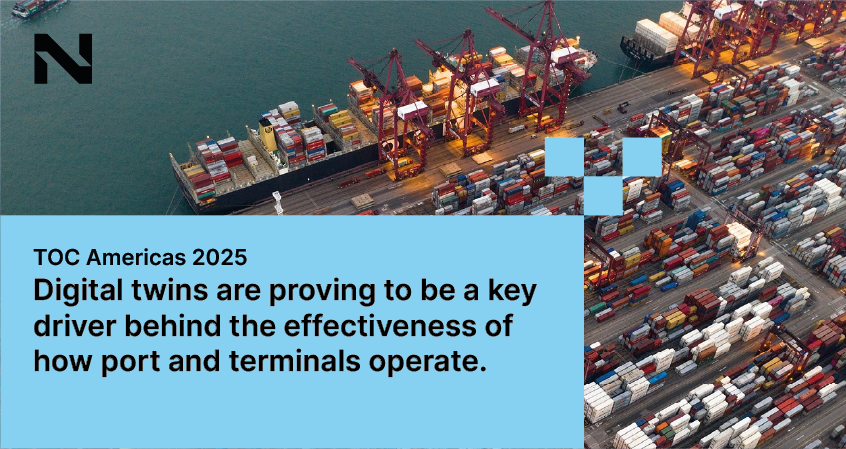
Digital twins are proving to be a key driver of effective operations, providing users not just with data, but with actionable insights that would previously have gone unseen.

Alongside this, Latin America’s port landscape is expanding quickly, with countries like Brazil, Colombia, and Panama among the highest for year-on-year container growth in 2024, with Brazil up 19.6%. We’ve also seen Chancay Port in Peru come into operation, and Brazil’s STS 10 and Chile’s Puerto Exterior de San Antonio on the horizon.

But progress in the region isn’t without obstacles. Drought at the Panama Canal in 2023 caused major rerouting of maritime traffic. Economic strain in Argentina and drought in the Paraná River—critical for inland container transport—resulted in a container traffic decline of -29.5%, exposing how quickly established trade patterns can shift.

Even as growth rebounds, the mix of rapid expansion and episodic disruption is redefining the needs of the industry landscape. Ports and terminals that can read conditions early and adapt in real-time will be best positioned to capture periods of growth, and best prepared for potential disruptions.

Digital twin technology’s potential for the industry is clear, but its adoption across the Americas has been uneven. Many operators remain cautious, questioning whether their existing digital infrastructure is robust enough to handle the vast quantities of data that digital twins depend on. Others point to the urgent need for stronger cybersecurity measures to protect these new, advanced systems from emerging threats. Along with these concerns, a common question among many in the industry is: how will digital twin technology shape the industry’s future operations?

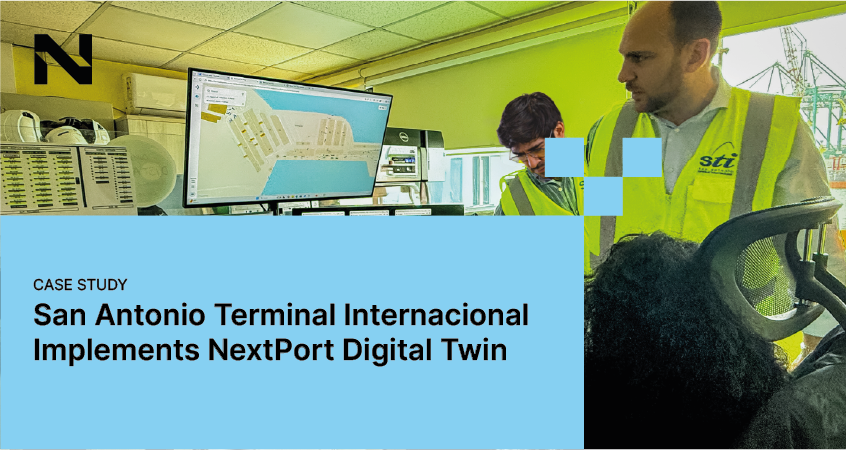
These are the questions that will define the next stage of digital transformation for ports in the Americas, with real-world examples being central to this discussion. In San Antonio, Chile, NextPort’s deployment at Hanseatic Global Terminals Latin America demonstrates how digital twins are already helping operators improve visibility and decision-making across their operational landscape. NextPort integrates real-time data from across the terminal and generates alerts when disruptions occur, or even when they are likely to occur in the near future. This includes logistics at quay, yard and gate. With access to advanced disruption notification, as well as detailed data on the disruptions themselves, operators can troubleshoot these problems before they become major issues within the port or terminal. Additionally, NextPort records and learns from historical operational data, which provides the foundation for continuous improvement across the system. For our partners, this technology is revolutionizing the way that ports and terminals operate.  

At Hanseatic Global Terminals Latin America, we believe Artificial Intelligence begins with understanding operations. By turning data chaos into intelligent operations, we’re empowering our teams to make faster, smarter decisions grounded in clarity and control.”
— Iván Deosdad, Senior Vice President of Operations, Hanseatic Global Terminals Latin America.

The next step is to further refine the system to filter, prioritize, and summarize these alerts, ensuring that operators receive the most relevant insights first and can focus their attention where it matters most.

TOC Americas 2025 provides an opportunity to move this conversation forward with others in the industry. At its core there is a shared recognition that, if thoughtfully integrated, digital twins can serve as both a driver of efficiency and resilience by positioning ports and terminals for long term growth amidst an evolving landscape. From forecasting demand to managing disruptions, this technology has the power to reshape how terminals operate, but the challenge lies in how quickly industry can put this into practice.

More News & Events

NextPort speakers at CTAC 2026

NextPort speakers at CTAC 2026

There is less than a month to go until we’re back at the Container Terminal Automation Conference in Valencia, Spain.

There is less than a month to go until we’re back at the Container Terminal Automation Conference in Valencia, Spain.

This year, in addition to participating as Bronze Sponsors, we’re proud to join industry peers on stage to share practical insights and real‑world experience. If you’re attending CTAC Europe, make sure you don’t miss these sessions:

- Automation vs. Performance: How can the promised benefits of automation really be achieved? — with Christian Blauert, SVP and Global Director - Port and Terminal Development at Moffatt & Nichol.

- From systems to capabilities: Rethinking technology adoption in container terminals — with Oscar Pernia, Chief Technology Officer at NextPort.

- How container terminals can convert digital visibility into operational advantage — with Andy Barrons, Chief Commercial Officer at NextPort.

- Building the data backbone to enable automation and AI — with Oscar Pernia.

Please visit our stand in the main exhibition area, where we'll be on hand to give you a live demonstration of NextPort.

We look forward to connecting with you there.

Read More
NextPort 2.0: Evolving Digital Twin Technology for Ports and Terminals

NextPort 2.0: Evolving Digital Twin Technology for Ports and Terminals

At NextPort, we are advancing the future of port and terminal operations through next‑generation digital twin technology.

At NextPort, we are advancing the future of port and terminal operations through next‑generation digital twin technology.

Built as a dynamic, real‑time replica of each customer’s facility, our platform brings together vast and varied data sources —from equipment activity to meteorological and ocean conditions— to deliver the information that gives terminal control rooms insight right when it’s needed.

By transforming data from a complex operational landscape into clear, actionable intelligence, NextPort helps users anticipate issues, optimize performance, and make smarter decisions over time.

So, what’s new in our latest version called NextPort 2.0:

Increased terminal visibility

Our platform for terminals now enables users to see on one screen all the activities associated with ship arrivals and berth planning, giving a one-page overview and creating a central place to manage each call. This enhancement improves predictability and optimization in terminal operations and supports better alignment with port authorities.

Improved alerting system

We've redesigned how alerts work to make them simpler to configure and easier to understand at a glance. Our workflow management application enables control room operators to quickly see what's important, set individual thresholds for alarm activation, and respond faster when things go off track in the terminal.

What‑if scenario modeling

NextPort is testing a new module that enables users to model scenarios and evaluate different allocation options for nautical and technical resources, reducing risk in decision-making. This means port scenarios and their outcomes can be compared before any operational changes are made, allowing decisions to be based on real constraints and actual port activity.

Real‑time weather and ocean conditions information

Even more data sources can now be integrated into the platform. By incorporating metocean variables and alarms that alert when conditions cross safety thresholds, port operators can now adjust plans proactively instead of reacting to problems.

Emission analytics and EU-ETS impact assessment

By combining different maritime data sources NextPort now is modeling vessel fleets, routes and port calls: aggregating a new dimension to our port call optimization focus. Our analytical tools apply EU-ETS regulatory framework to analyze its impact at ports, for port authorities analyzing their competitiveness and ocean transport networks evolution.

NextPort 2.0 is another step in our continuous journey to refine, expand, and elevate the digital twin experience for ports and terminals.

Read More
How Industry 4.0 will Shape Ports and Terminals in 2026

How Industry 4.0 will Shape Ports and Terminals in 2026

The technology ports and terminals adopt today will help define their future operational capacity, market opportunities and place in the global supply chain.

The technology ports and terminals adopt today will help define their future operational capacity, market opportunities and place in the global supply chain.

With increasing vessel sizes, higher cargo volumes and operational demands, ports and terminals are looking to new technology to help them adapt to future needs. Here are four ways we see technology shaping ports and terminals in 2026.

1. Data foundations at ports and terminals: We are deep into the big data era, with software and sensors which can be attached to almost anything. A robust strategy behind data collection and analysis is critical to harnessing the potential of data to aid operational simplicity and actionable support from systems. The right data at the right time is essential – whether that’s metocean data such as wind and wave conditions, or a crane cycle time.

2. Digital twin adoption and value: Technology is evolving at a faster rate than adoption, but digital twins are already becoming an established foundation for building a data infrastructure fit for future port and terminal operations. The technology offers immediate benefits, from proactive monitoring to flagging problems before they occur, and analyzing larger datasets underneath the digital twin to reveal trends and patterns that can enhance decision-making.

3. Smarter planning for optimized operations: We are increasingly seeing artificial intelligence and machine learning applications. Simulation technologies also allow users to model a port or terminal’s operations and infrastructure in full – being able to evaluate What-If scenarios. Additionally, agentic AI is coming to transform the way users plan operations, with planners utilizing execution track records to leverage feedback loops that can learn from past and predict future more accurately.

4. Digital driven compliance: The maritime regulatory frameworks are introducing strong digitalization requirements and more data is being generated at vessel, port and terminal fronts. The compliance on those, whether it is local navigation rules, local safety procedures or emissions regulations will be enabled by many of standardized data components and interfaces between existing like ECDIS or GIS and new systems like digital twins or AI based agents (maritime co-pilots).

In 2026, the ports and terminals that start exploring how technology can underpin their future will not only increase their present-day resilience, but put themselves in a position to thrive this year and beyond.

Read More

Ready to See NextPort in Action?

Discover how NXP Ports and NXP Terminals empower your team with collective intelligence-driven solutions. See how we combine data and human expertise for better trouble shooting and smarter decision-making.

Request a Demo